
Last Friday, my pastor told my small group one of the most insightful truths I’ve heard: “Being a Christian isn’t about trying harder; it’s about surrendering more.”
Naturally, I began applying this idea beyond faith. As a Penn student, I am quick to sacrifice sleep, meals, enjoyment, and even my hair (as an engineering major) in order to earn a higher letter grade in Linear Algebra. But with Jesus, this just wasn’t the same – and the nature of sacrifice Jesus wants isn’t the same either, as the Gospels show.
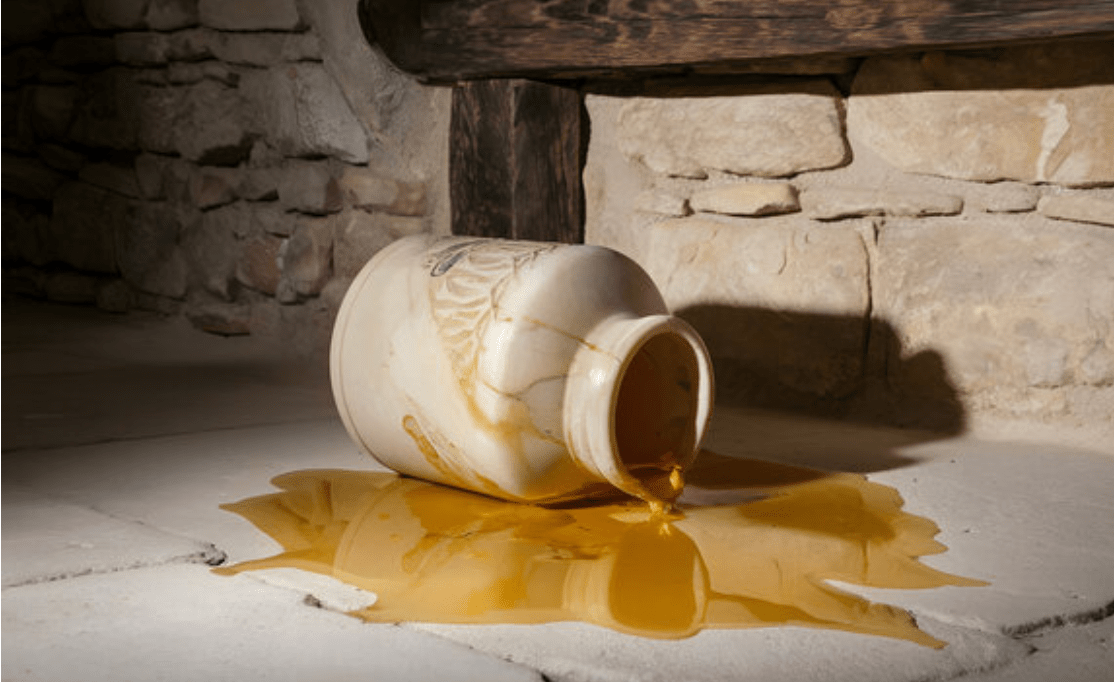
Mark 14:1-9 demonstrates what surrender actually looks like. Two thousand years ago today, Jesus arrived in Bethany, preparing to be crucified just two days later. He decided to spend one of his final meals in the home of Simon, a man who had previously had leprosy. While he was eating, a woman entered the room and did something unexpected: she broke open a “beautiful alabaster jar” and poured the perfume contained in it on Jesus’s head.
The phrase “broke open” in the NLT translation stood out when I first read this passage. This perfume could very well have been her most expensive possession, and yet she didn’t hold any of it back – everything that she realized was right to give Jesus, she gave it all.
It turns out the gift was actually very costly. Verse 4 describes the “indignation” of Jesus’s disciples, “‘Why waste such expensive perfume?’ they asked. ‘It could have been sold for a year’s wages and the money given to the poor!’ So they scolded her very harshly.” It is curious to me why the disciples would react so passionately to the woman’s humble sacrifice. Perhaps it was due to a slight envy or shame that they did not possess the same faith that what Jesus was about to undergo was beautiful. This was especially true of Peter, who famously began to drown in the lake that Jesus showed he could walk on.Thus, they dressed their indignation up as noble concerns for the poor.
Jesus saw right into their hearts. He replied to them in Verse 6, “Leave her alone. Why would you criticize her for doing such a good thing to me? You will always have the poor, and you can help them whenever you want to. But you will not always have me. She has done what she could and has anointed my body for burial ahead of time.” Jesus affirms that sharing with those in need is right, but that the call to reverence God in wholehearted surrender is the foremost priority. Amazingly, the woman knew this while having spent far less time with Jesus as his main twelve. Yet not only was the presence of Jesus something that she cherished, but by giving Jesus everything of the most expensive item she had, she recognized the weight of what Jesus was to give for her.
Just as striking as the woman’s act is how Jesus responds to it. Notice: when the disciples scolded her, Jesus was the one who spoke up. Oftentimes in high school, I was afraid of engaging in even little acts of holy surrender in public, from saying grace to fasting at lunch, for fear of having to justify to others why I was honoring God. Yet this woman did not need to justify herself: Jesus did it for her. I believe this reveals another aspect of surrender that is a relief to us self-conscious humans: as you relinquish your standing of being by yourself for the security of relying on the Creator, you become increasingly indistinguishable from his nature, and thus your actions become justified by His character. Jesus stands for you and promises to bless you as he did with the woman in Verse 9.
True surrender is total, foremost, and liberating. As you walk about creation today, focus on the subtle voice of God and consider how you could give the precious things you have (like time) to honor the sacrifice that Jesus has made for you. The Word declares that Jesus sees you, and he will not let your genuine acts go unnoticed.
 Penn Epistle