
Before you read this, please pray for me that God uses my words to reveal the glorious mystery of the Gospel of Christ to all those who have not heard.
There is an old Templar chant that the Crusaders would sing together in the chapel called Crucem Sanctam Subiit (He bore The Holy Cross). The Crusaders, in beautiful baritone, sing of Christ’s triumph over hell and subsequent resurrection, a few lines from the chant go:
Crucem Sanctam Subiit,
Qui infernum confregit,
Accintus est potentia,
Surrexit die tertia,
Alleluia
Surrexit Christus
This chant of the Crusaders would have been a chant that reassured them of their faith and Christ’s ultimate triumph over the powers of this present world. One might ask, “how does Christ triumph?” or “what are the Crusaders truly exclaiming?” I would argue that the Crusaders are chanting the essential message of the Christian faith: Crucem Sanctam Subiit. Christ bore the Cross for us, and with the Cross, this instrument of death and pain, what Cicero calls the “Summum Supplicium” ,“the unsurpassable punishment” he triumphed over Hades (qui infernum confregit) and gave us a chance at life.
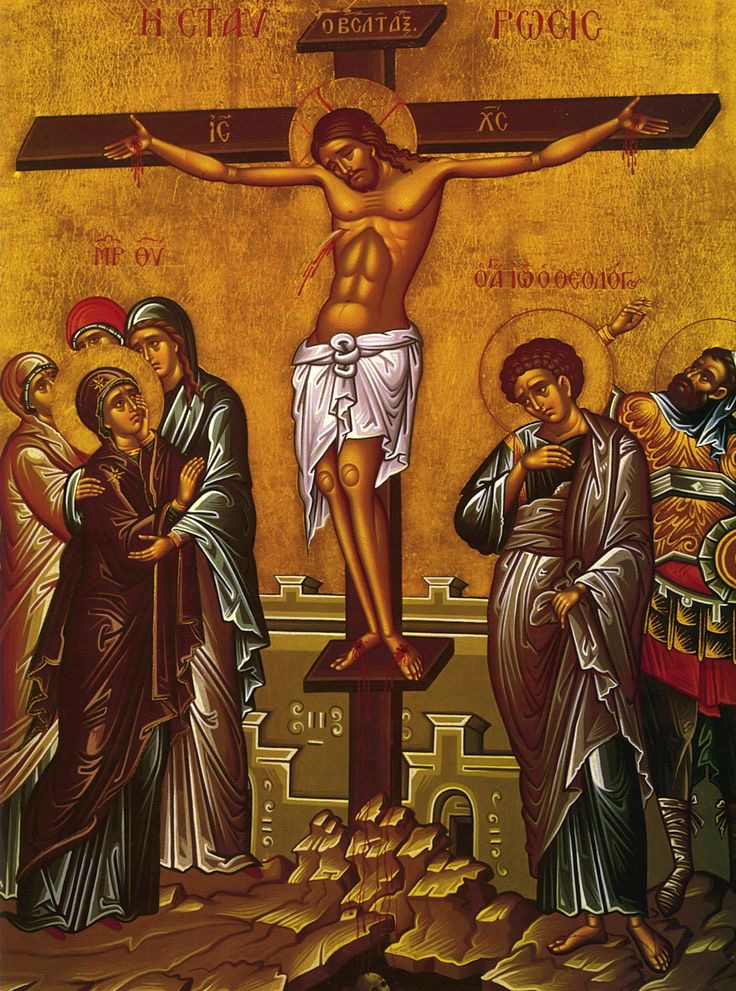
The Crucifixion, I find, is an event a lot of Christians don’t fully understand. The Cross has been relegated to that of a mere ornament around the neck or a carving on the wall acknowledged every once in a while. But to relegate the Cross to such a position would be to lose the core of the Christian faith. For “the Cross of Jesus is for us the truly critical authority over the world and everything in it, and as such authority it determines the totality of our existence, thinking, speaking, and deciding.” says Ernst Käsemann, a German Lutheran theologian. The Cross of Christ is the core of the Christian faith, the very hinge on which it hangs. This is a very bold claim, I know, but bear with me and think about this: Does the resurrection make sense without the Cross? Does Christ’s call to suffer and die to ourselves make sense without the Cross? Does our atonement make sense apart from the Cross? I would say no. For the Cross of Jesus informs all aspects of the Gospel and the Christian life. This is the reason the Crusaders, at the beginning of every stanza, proclaimed Crucem Sanctam Subiit because what followed from those words were informed by the Cross. Thus it is imperative for Christians to reencounter the importance of the Cross in our lives and to meditate on it with conviction. When we think about the Cross, a few things should come to mind: (1) the scandalous nature of the Crucifixion; (2) Our lives in light of the Crucifixion; and (3) The role of the Crucifixion in preaching the Gospel. This article will go through all of these as well as provide some meditative practices at the end for thoughtful prayer.
- The Scandal of the Cross
As mentioned above, the Cross has lost its original scandalous connotation in the minds and devotions of many Christians today. While many Christians might say nice things related to the Cross that are true, they often miss the essence of that truth, that is, what the Cross meant for the original viewers. This original meaning of the Cross should inform the ideas that are drawn out from it. To understand this original meaning, we must first turn back to before the coming of Christ to the book of Deuteronomy. Deuteronomy 21:23 says, “…anyone who is hung on a pole is under God’s curse…” This verse is referred to in Galatians when Saint Paul says, “Christ redeemed us from the curse of the law, having become a curse for us—for it is written, ‘Cursed be every one who hangs on a tree’—” Ernst Käsemann says, “If the Cross, which we value as a symbol of religiosity, was erected at a place where God was deemed absent, then the veneration and worship of the one who hung upon it would without question be the most frightful scandal.” Christ on the Cross is submerged in God forsakenness far before he even gets Crucified but this forsakenness finds its end in the Crucifixion. Everything He said and did seemed to avail to nothing upon viewing the Crucified Christ. He, the man who was deemed God, greater than the prophets, greater than earthly wisdom, is embarrassed and killed. NO ONE saw this coming and it didn’t make sense to anyone (yet). In a word, it was scandalous. But this is something we must remember, that Christ stepped into God forsakenness and was given a criminal’s death because of His love for us and our transgressions against Him. To remember the scandal of the Cross is to remember the essence of the Gospel.
- Our Lives in Light of the Crucifixion
We, the faithful, are called to live our lives as Christ lived his: Faithful unto death, even death on a Cross. But surely they don’t Crucify people any more, right? Right, but what this is meant to convey is our unwavering determination to orient our lives to the will of God only even if we may face brutal death. Christ says in the Gospel, “and whoever does not take up the cross and follow me is not worthy of me.” and again, “If any man would come after me, let him deny himself and take up his cross and follow me” To take up one’s Cross, an instrument of one’s own torture, which would mean enduring suffering faithfully, is every Christian’s vocation. The Cross is everyone’s burden to bear but the beautiful thing is: we have each other to help us lift our Cross. We must show mercy to one another and bear each other’s burdens as the Scriptures tell us. The Crucifixion is a reminder not only that we must suffer, but that when we suffer with God, we will see victory and salvation. The Crucifixion shows us perseverance in the face of evil and suffering. We wear our Cross, then, “as a witness to our willingness to die out of love for Christ.” Our lives, then, in light of the Crucifixion should be lived with these things in mind: suffering will come but endure, bear each other’s burdens and be merciful, when we suffer with God and endure we shall see victory and salvation, and most importantly, God is with us, especially when we suffer.
- The role of the Crucifixion in preaching the Gospel
Saint Paul in his letter to the Corinthians said, “We preach Christ crucified, a stumbling block to the Jews and folly to the Gentiles, but to those who are called, both Jews and Greeks, Christ the power of God and the wisdom of God.” and again, “For I decided to know nothing among you except Jesus Christ and him crucified.” Why doesn’t Saint Paul say that he’s come to preach Christ resurrected? Surely this is more important, given that he dedicates the entire fifteenth chapter of his epistle to it. What Saint Paul is doing here is subtle yet profound. He chooses to preach nothing and know nothing but Christ and Him Crucified because the Crucifixion of Christ is the essence of the Gospel. It, as mentioned, informs all parts of the Christian message and reveals to the viewer the wisdom of God. The resurrection means significantly less without the Crucifixion, the ministry of Jesus means significantly less without its apogee at Golgotha. The curtains tearing, the water and blood of Christ spilling, the words “Father, forgive them, for they know not what they do.” are perplexing if not informed by the Crucifixion. Thus, it is imperative that when we preach and share the Gospel at the center of that Gospel should be the Cross of Christ. For it is by that Cross we have been saved and redeemed and it is with that Cross we must walk through the world. The Cross is a stumbling block and folly to those who are perishing, but to us, who have been redeemed, it is the power and wisdom of God, says Saint Paul. We must not forget that. When we wear our Crosses out in public, let it not be for bling and show but rather as a message to all that we will, out of love for God, willingly go to our death for the message of salvation through Christ Jesus and Him alone. Let us walk through this world, brothers and sisters, with our Cross singing Alleluia! Alleluia! Crucem Sanctam Subiit.
- Meditative Practices
As a Catholic, I make it a habit to pray the rosary at least once a day and after that sit, breathe, grab my prayer bracelet, and adore the holy crucifix I have sitting on my desk while praying the Jesus Prayer: Lord Jesus, Son of God, Have Mercy on me a Sinner. I’ve found this to be an incredible practice for slowing down and reminding oneself of who God is, who I am, and why I love and need God. Another practice I would suggest is sitting down and reading the Gospel of Matthew from chapter 26:36 all the way to chapter 28. Reading the Gospel and reflecting on Jesus’ last couple of hours alive before he is Crucified and then giving prayers of thanksgiving to God for what He accomplished on the Cross is also a great meditative practice to remind you that “you were bought for a price.” The final meditative practice I will suggest is sitting in a church and staring at the Cross and just saying Thank You, God. Just breathing and meditating on God’s goodness through the Cross.
 Penn Epistle