
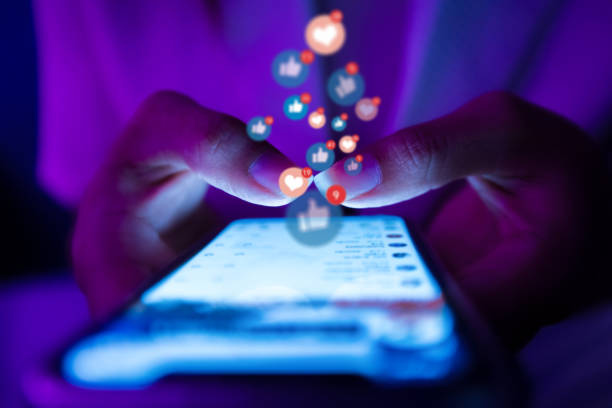
When I returned home for Thanksgiving, I had dinner with my extended family. Yet, something felt eerily good about this dinner. It was not the inordinate amount of food I consumed nor seeing friends and family back home, but rather, it was the shutting off of our devices. It was an incredibly pleasant experience to be able to have focused fellowship with friends and family without any concern for what is happening in cyberspace. I enjoyed this mini digital fast during Thanksgiving dinner so much that I even refused to check my phone before I slept that evening. However, the next day, I found myself again attached to my electronic devices, checking notifications. Why are our devices so captivating?
I could articulate the most apparent dangers associated with the gripping, ever-present role of phones and social media, but there would not be much value in belaboring the harms of social media further; this would be nothing new. We know that social media has decreased our attention span, increased loneliness, and has adverse educational, social, and even spiritual outcomes. Specific platforms may even pose a national security risk. However, I hope to offer a new perspective – that social media is a cultural idol, a personal addiction, and a spiritual drug.
Whether it is posting in time for BeReal, trying to tag friends on Instagram stories, playing video games, or busily checking our devices, digital media’s influence on the individual and society seems only to be increasing. Reflecting on the finally over election season and the holiday season, there are many apparent idols during this period – whether it is politics, material goods, or anything else. But the most egregious and highest-placed idol is digital media.
To unpack the idea of social media as a cultural idol, we first need some background on idolatry as a biblical typology. Theologian G.K. Beale proposes the concept of idolatry as the original sin beginning from the Garden of Eden. Beale writes, “[I]nstead of resembling God’s image as had Adam before the fall, they [sinful man] worship and resemble some image in the creation. In this manner, the image of God in humanity became distorted.” Consequently, the theology of new creation is so that “humans begin to be re-created and to reflect the image of God instead of the likeness of fallen creation, a process completed at Christ’s final coming.”
With this in mind, Christians living in the twenty-first century have an interesting tussle. Christ has set us free from our idolatry and called us to resemble his image rather than our own “metal images.” Yet, we clearly are not there: we are still living with our sinful nature, with so many idols. This tussle between Christ’s victory on the cross redeeming us in the present moment, and eager anticipation for eternity stems from the theological framework of “already but not yet.” We have already been saved from the consequences of sin, but we are still waiting and fighting against the effects of sin. Christ has already freed us from the spiritual slavery that is idolatry, but many Christians have yet to live as such. By dying to our idolatry and worshipping Christ as supreme and adorned over all creation, we are not only restoring the rightful glory of Christ as worthy, but we are participating in the inauguration of new creation.
Biblical theology aside, digital media is an outlet and a symptom of expressing a deeper spiritual ail at the societal and personal levels. Societally, digital media is a way of communicating and promulgating not only nihilistic and hedonistic worldviews but also ‘ground zero’ for many of our most profound identity crises. However, I intend to talk about digital media as a spiritual drug and a form of spiritual drunkenness.
Scripture clearly admonishes us to be sober-minded and not be a drunkard (Prov. 20:1, Luke 21:34, Eph. 5:18, Gal. 5:21, 1 Peter 5:8). At first, it is easy to dismiss these verses as singularly addressing being drunk on alcohol, but Scripture is conveying a much broader principle that the Christian should not be subsumed by anything such that we lose focus on God and his calling and blessing. Fundamentally, drunkenness and soberness are about sovereignty and control. When someone is drunk and behind the wheel, they are “driving under the influence,” and the degree of influence or impairment depends on the level of drunkenness. The spiritual corollary is similar. Most people today interact with digital media at some level, resulting in the difficult task of discerning when we become ‘drunk’ on digital media. Several indicators that someone may be drunk on digital media is if it becomes a coping mechanism or even when it is used to consistently meet a particular need – especially if such a need is spiritual. Furthermore, we know clinical addictions produce mood changes that give the addict the illusion of control; a similar principle is at play with digital media addiction or drunkenness.
But there is also a more subtle spiritual drunkenness: that we are drunk on ourselves, our pride, arrogance, and idolatry. Concerning being drunk on ourselves, the issue here is a broader struggle with surrendered living, with digital media being one of the battlefields. Many Christians acknowledge spending too much time scrolling Instagram or watching too much TV. Yet, they struggle to do much about it because they lack the spiritual will. Most Christians lack spiritual will because they have misconceptions about obedience. Perhaps the most distinct quality in a Christian should be the ministry of the Holy Spirit in restraining, reproving, and regenerating Christians. Christians should be repelled from and hate sin. However, oftentimes, we ignore the still, small voice of the Holy Spirit whispering in our consciences; we refuse to be obedient. We refuse to be obedient because, ultimately, we still want to control our lives, perhaps due to a lack of trust or a false belief that obedience somehow benefits God when it is living in alignment with God’s plan to bless us abundantly.
We often think of idols as large, powerful, authoritative, something admirable and easy to love. This cultural understanding of idols has caused us to largely ignore one of the most influential and prevalent idols of our day: digital media. We have digital media at our fingertips when, in fact, it is digital media that has billions of people at its fingertips. We are so subsumed by it that it even has the horrendous potential to draw us away from the one who deserves our total devotion and eternal worship. My prayer is that the people of God examine their relationships with digital media and order their relationships so that they can truly ‘set their mind on things that are above, not on things on Earth.’
 Penn Epistle
Great read!